
7 SEO Automation Software and Tools That Build Real Business Strategy

Co-Founder / CMO
Your brain is a goldmine of expertise, but your “content strategy” is probably a chaotic mess of spreadsheets and half-baked ideas that do little to improve your online presence.
I hit that same wall. I realized I needed a system, so I went looking for a tool to help. And I quickly discovered the trap: most SEO software isn't built for experts. It's built for analysts. It buries you in data dashboards and competitor metrics instead of providing what you actually need: better judgment.
That’s why I wrote this guide. We’re going to bypass the glorified spreadsheets and focus specifically on a new class of SEO automation software: tools designed to be a strategic partner, not just a data provider.
Let’s find the right one for you.
Table of Contents
- •n8n
Yahini
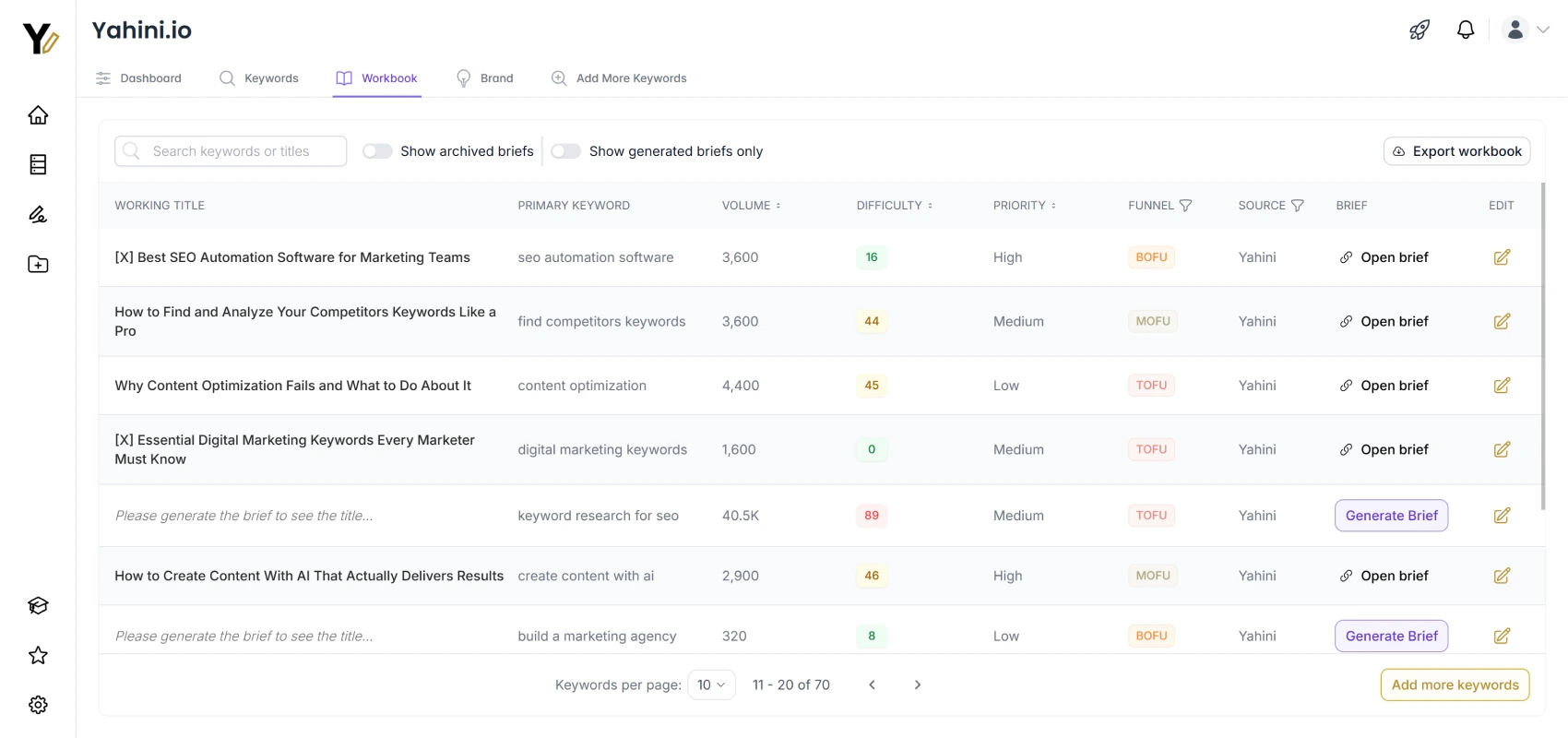
Yahini is an AI content strategist. It’s a system designed to fix a very specific, high-value problem: building the expert-level strategic foundation (keywords and content outlines) before you write.
It works by combining three layers of intelligence to fix the generic, soulless fluff you get from other AI tools. This multi-layered approach is what’s missing from one-size-fits-all AI:
-
Your Brand Intelligence: It starts by learning your actual business (your unique arguments, your audience's pain points, your products, and your voice). It consults this profile in every decision it makes.
-
Live market reality: For any topic, Yahini analyzes the current, top-ranking Google results to understand what the algorithm is rewarding right now. It identifies the gaps and the winning patterns, so you're not guessing.
-
Embedded expert frameworks: Finally, it applies proven, battle-tested content strategy frameworks to the plan. It knows the difference between a high-intent BOFU article and a broad TOFU one, and it builds the brief accordingly.
The result is a prioritized, funnel-aware keyword roadmap and a set of expert-level briefs you can confidently delegate to any writer.
Best For
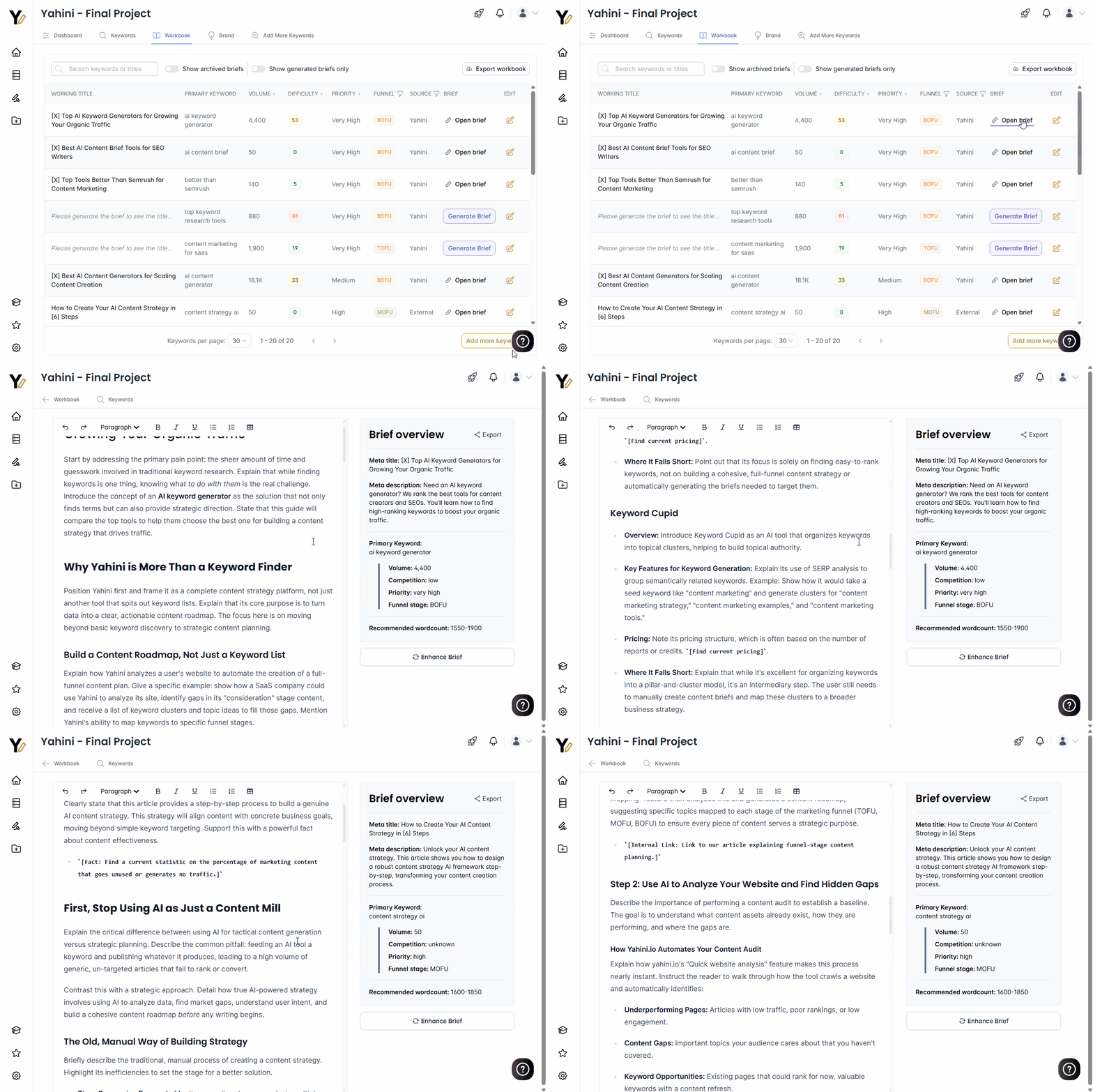
Yahini is purpose-built for the "Expert Founder" or the in-house marketer who is the strategic bottleneck.
If your expertise is trapped in your head and you're tired of wasting time and money on content that doesn't sound like you or connect with your ideal customers, ultimately failing to increase organic traffic, this is your system. It’s for people who want to delegate the right work.
To show you what we mean, we used Yahini to build the entire strategic brief for this article. It identified the target audience's pain points, analyzed the competition, and generated the outline and core arguments you're reading right now.
Where it may not fit your needs
If you're a massive enterprise with decades of content and a large team of SEO analysts, Yahini will feel too focused.
It's not built for deep technical SEO audits or managing a 10,000-article library. This includes tasks like identifying broken links or implementing complex schema markup.
Its core job is to create a high-impact content strategy from your expertise, not to manage immense existing complexity.
Pricing
For $39 a month per project, you get access to all of Yahini’s features, letting you generate 20 content briefs with total month-to-month flexibility to pause when you need to.
And if you just want to give it a spin first, there’s a completely free plan that lets you set up a project and create a handful of briefs to see how it feels before committing.
n8n
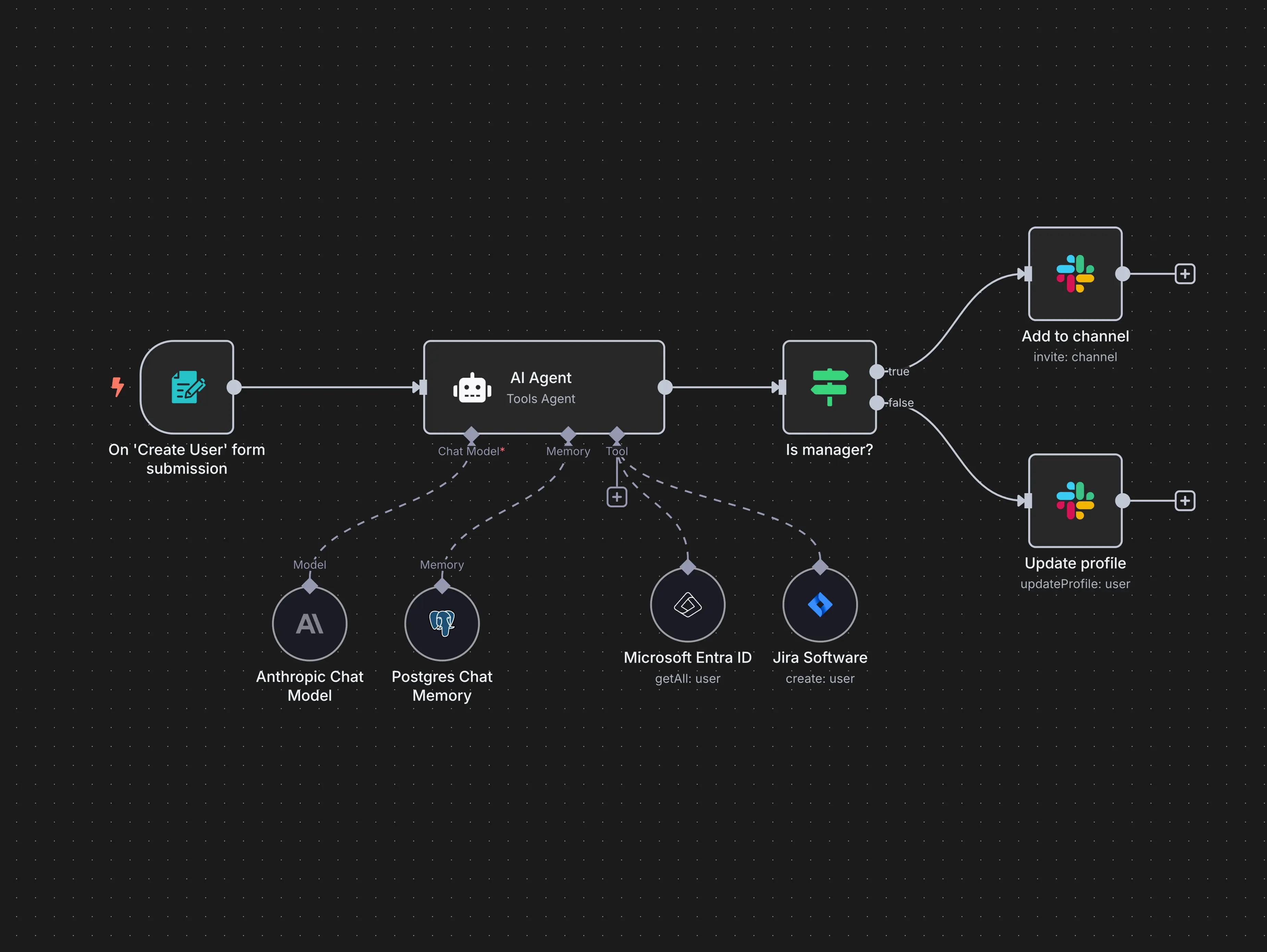
n8n is a powerful, open-source workflow automation tool; you can think of it as a self-hosted, highly technical version of Zapier. It allows you to connect various APIs (like OpenAI, Google Sheets, and SEO data providers) to build your own custom "AI agents" and automation sequences from scratch.
Best For
This is for the hardcore tech-savvy marketer or developer.
If you have engineering resources and a desire to build a completely bespoke SEO automation system tailored to your exact specifications, n8n gives you the raw building blocks. You could, for example, create a workflow that pulls data from a tool like Ahrefs' Site Explorer, identifies a target search query, and then sends it to ChatGPT for content generation.
You can literally chain together any process you can imagine, assuming you can code it.
Where it may not fit your needs
This is the definition of “some assembly required”. In fact, all assembly is required.
n8n provides the toolkit, but it offers zero built-in SEO strategy. You have to design the logic, find the data sources, manage the prompts, and build the entire system yourself.
For a founder or marketer whose main job is to grow the business, this is a massive and often fatal distraction.
I've seen friends go down this rabbit hole for months, becoming amateur developers instead of business builders. It’s the ultimate DIY project, with all the power and all the headaches that implies.
Pricing
n8n is source-available and can be self-hosted for free (though you'll pay for server costs and other APIs you connect).
Their cloud-hosted plans start around $20/month and scale up based on the number of workflow executions you need.
SEO Stack
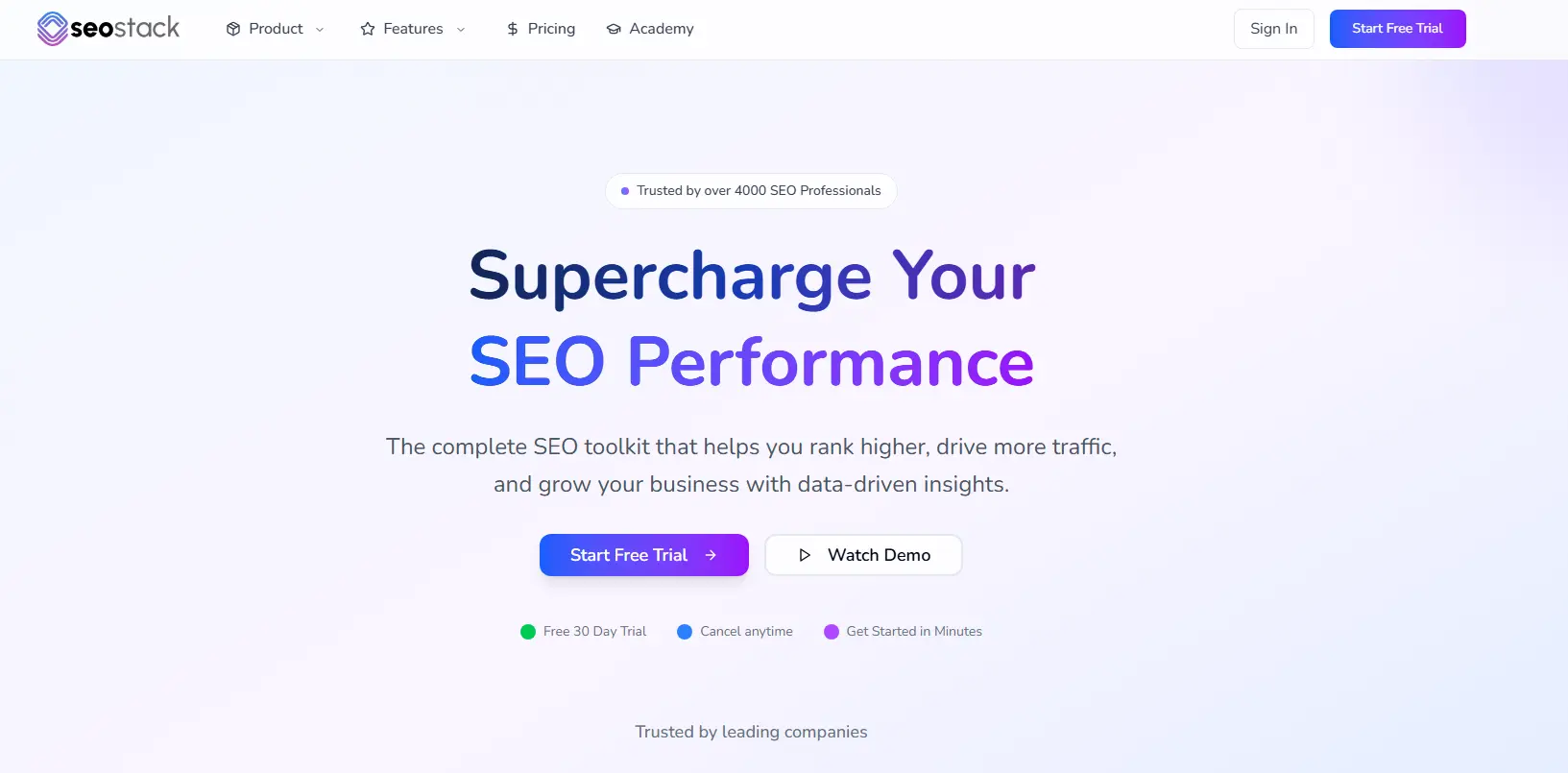
Let’s be honest, Google Search Console is both a gift and a curse. It’s the closest thing we have to ground truth, but it feels intentionally designed to stop you from doing any serious, long-term analysis.
SEO Stack is built to fix exactly that. It's less of a standalone “tool” and more of a key that unlocks your own GSC data from its self-imposed prison. It hooks into your GSC account and warehouses your data, letting you look back years, not months. You can finally filter, group, and export everything, allowing for the kind of deep-dive analysis you thought was only possible with enterprise-level dashboards.
Best For
This is for the data-hungry freelancer or the agency SEO who is a master of spreadsheets.
If your process involves exporting huge CSV files of keywords and you have your own robust, manual system for sifting, sorting, and prioritizing them, SEO Stack can be a very cost-effective way to get the raw data you need.
Where it may not fit your needs
Frankly, this tool is a perfect example of data without strategy. It will give you a list of 10,000 keywords, but it offers no opinion or intelligence on which ten you should actually target to grow your business. It won't tell you how each term fits into your broader SEO strategy. It doesn't know your products, your audience, or your goals.
It’s a librarian that can hand you every book in the building, but it can’t tell you which one to read. The strategic burden is 100% on you. You're responsible for all content changes and tracking their impact.
Pricing
SEO Stack’s plans start from $69.99 per month.
LowFruits
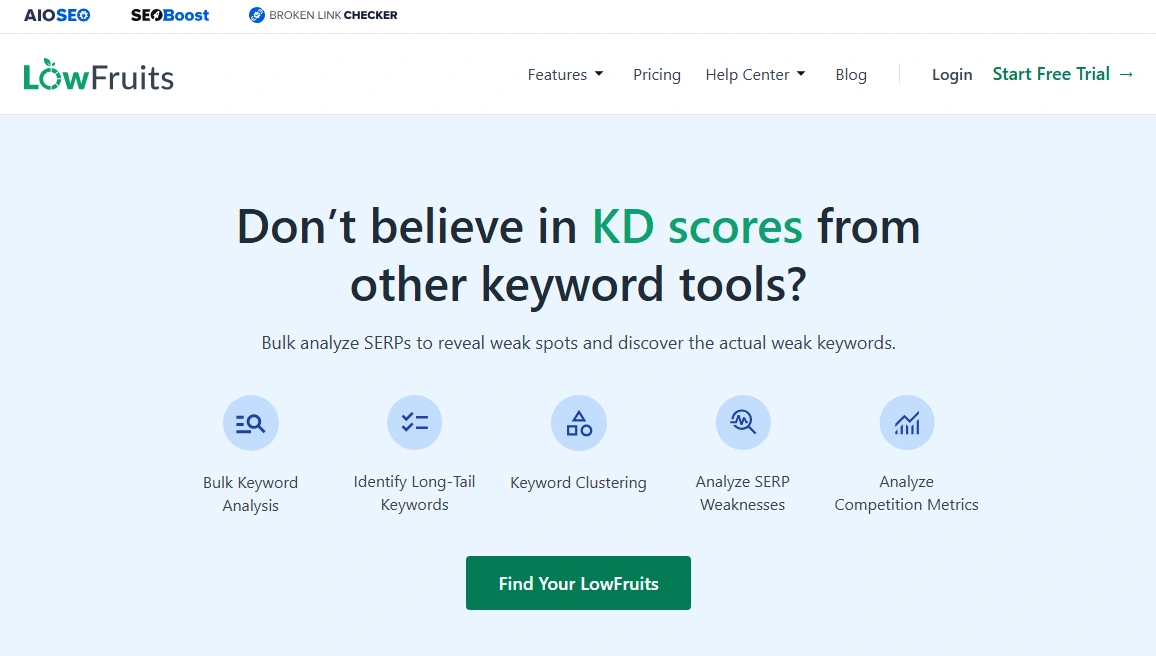
LowFruits is a specialized keyword research tool laser-focused on one thing: finding low-hanging fruit keywords. It scours the SERPs for keywords where forums (like Reddit and Quora) or other low-authority sites are ranking, signaling an opportunity for a well-written piece of content to rank quickly.
This is especially effective for niche topics and Local SEO opportunities.
Best For
It's an excellent tool for new websites or businesses looking to get early traction.
If you need to build initial topical authority and get some quick wins under your belt, LowFruits is one of the best tools on the market for identifying those easy-to-rank-for queries. I’ve used it myself to find those first few keywords that get the momentum going.
Where it may not fit your needs
A strategy based solely on “easy” is a short-term one.
LowFruits is a tactic, not a complete strategy. It's brilliant at finding keywords you can rank for, but it has no mechanism for telling you which ones you should rank for based on your business goals.
This is a critical flaw if you're focused on generating a positive return on investment. You can easily end up creating a lot of content that ranks well and drives traffic, but doesn't attract your ideal customer or contribute to revenue. This can lead to a low conversion rate despite high traffic numbers.
Pricing
Pricing starts at $21 per month, billed yearly or $29.9 per month billed monthly.
Surfer AI

Surfer AI is the AI-writing extension of the popular SurferSEO content optimization tool.
It takes a target keyword you provide and automatically generates a full-length, SEO-optimized article designed to rank based on an analysis of the top-ranking competitors. It also offers optimization recommendations to fine-tune your content.
Best For
This tool is for content teams that have a very high publishing velocity and have already done their strategic homework.
If you've already decided on a keyword that you know is strategically valuable, Surfer AI can take over the drafting process and produce a solid, well-structured, and highly optimized first draft in minutes.
As I mentioned before, its powerful optimization features help ensure your on-page SEO is on point.
Where it may not fit your needs
It’s a writer, not a strategist. And this is a critical distinction.
The quality of the output from Surfer AI is entirely dependent on the quality of the LLM it uses and the prompts architecture in the backend.
It also doesn't help you decide whether that keyword is a high-impact BOFU term or a low-value, top-of-funnel vanity keyword.
Without a strong upfront strategy to guide it, Surfer AI just helps you create the wrong content, faster, and won't help you with the overall SEO strategy, like crafting the compelling meta descriptions needed to improve click-through rates.
Pricing
Surfer AI is an add-on to a SurferSEO subscription (which starts at $79/month), with AI credits used per article.
SE Ranking
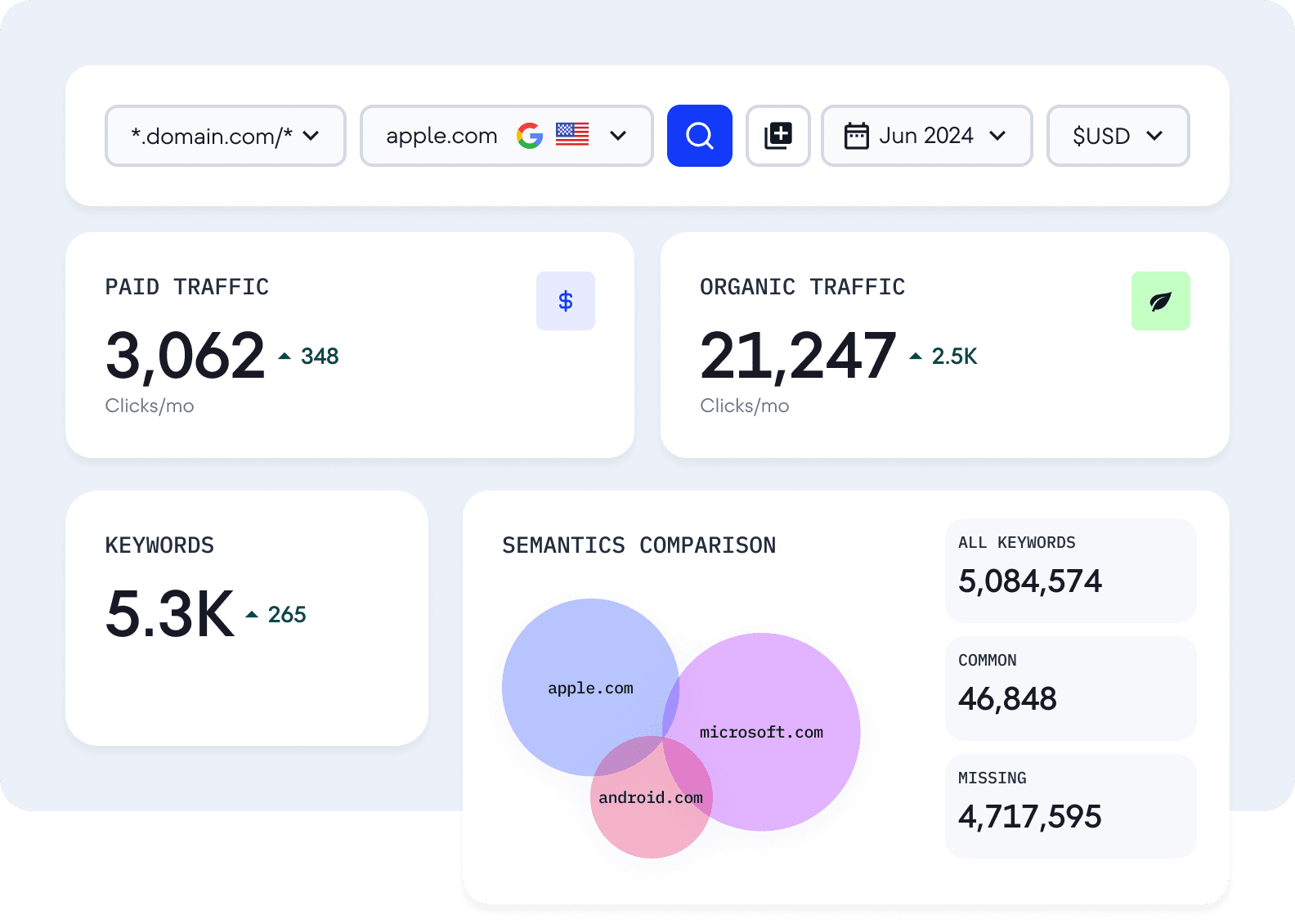
SE Ranking is an all-in-one SEO platform that offers a wide array of tools, including rank tracking, site audits, competitor analysis, keyword research, and backlink monitoring.
It can even connect with your Google Search Console account to import data directly. It’s designed to be a Swiss Army knife for marketers, covering a little bit of everything.
Best For
SE Ranking is a great fit for small businesses or agencies on a budget who need a single platform to cover all the basic SEO food groups.
It's particularly useful for those managing Local SEO campaigns or using backlink research tools to build authority. Many businesses use it to optimize their Google Business profile listings and improve their local SEO performance.
If you want one dashboard where you can track your rankings, do some keyword research, and run a site audit without paying the premium prices of Ahrefs or Semrush, it's a very solid and respected choice.
Where it may not fit your needs
The all-in-one approach is its biggest strength and its biggest weakness. It gives you dozens of tools and dashboards, but it's up to you to synthesize all that data into a coherent action plan.
It might provide data for your Local SEO campaign, but you have to decide how to act on it.
It's a classic data provider, not a strategy automator. You'll get the “what” (e.g., “your rank for this keyword dropped”), but you won't get the strategic 'why' or the prioritized 'what's next.' This means your SEO efforts still require significant manual direction.
It requires you to be the analyst and the strategist, piecing together SEO metrics from different parts of the tool to form a complete picture.
Pricing
SE Ranking is known for its competitive pricing, with plans starting at around $59/month.
What to Look for in an SEO Automation Tool
So how do you choose? Forget the feature lists for a second.
I’ve wasted more money on software with a million features than I care to admit.
Instead, I’ve learned to ask a few simple, direct questions.
1. What, specifically, is it automating?
"SEO Automation" is a dangerously vague term. The tools in this list automate wildly different things. Some automate data collection, some automate workflows, some automate writing, and some automate decision-making.
You have to be brutally honest about your bottleneck. For instance, does a specific search query have commercial intent? Is your problem having too much data and no insight? Then a data-warehousing tool like SEO Stack might be the answer. Is your problem having a solid keyword plan but no time to write? A tool like Surfer AI could help. Is your problem not knowing which keywords to target in the first place?
That's a strategy problem, and it's fundamental to improving your online presence.
Don't buy a tool that automates writing if your real problem is a lack of strategy. That’s like hiring a faster typist to figure out what book to write. Diagnose your specific pain point first, then find the tool that automates that.
2. Is automation a $10/h task or a $1000/h task?
“Automation” can mean two very different things. Is the software automating a low-level, repetitive task? Or is it automating a high-leverage, strategic task?
-
Task automation: This is about efficiency. It takes a manual process, like pulling data, formatting a spreadsheet, or writing a first draft, and makes it faster. This saves time for your analysts, writers, or VAs. Most SEO tools fall into this category. It's valuable, but it's tactical.
-
Decision automation: This is about judgment. It takes a complex decision-making process )like which keywords will drive business value, what topics to prioritize for the next quarter, or how to structure an article to beat a competitor) and provides a clear, opinionated answer. This saves time for the strategist, the founder, or the marketing leader.
Both are useful, but only if you apply them to the right problem. I'm always looking for tools that automate the work I, as the business owner, shouldn't be bogged down with.
3. What's the hidden 'work' it's creating for you?
No tool is a magic wand. Every piece of automation software comes with a hidden price tag: the work it implicitly demands from you.
-
A tool like n8n gives you infinite power, but its hidden price is that you essentially have to become a part-time developer to use it effectively.
-
A tool like SEO Stack or LowFruits gives you incredible data, but its hidden price is the hours of analysis and strategic thinking you must supply to turn that data into a coherent action plan.
-
A tool like Surfer AI writes a fast article, but its hidden price is that you must provide a strategically valuable keyword for it to be worthwhile. Garbage in, garbage out.
The most important question is: does the tool put the strategic burden on you, or does it help you lift it? A tool that just hands you a list of 10,000 keywords hasn't solved your strategy problem; it's just given you a new spreadsheet problem.
A truly valuable tool reduces the amount of follow-up thinking you have to do, it doesn't create more.
A few more questions to ask
"This is great, but will this replace my content marketer / SEO specialist?"
I hope not. A great content marketer shouldn't be spending their days in spreadsheets. They should be interviewing customers, connecting with experts, and injecting your brand's unique soul into your content.
The right software doesn't replace your marketer; it unleashes them. It automates the soul-crushing strategic grunt work so they can focus on the high-level creative work that only a human can do.
"Honestly, how much technical SEO knowledge do I need for this stuff?"
The answer should be “almost none.” The entire point of a strategy automation platform is to abstract away the complexity. You're the expert on your business, not on Google's latest algorithm update.
A good tool should translate your business expertise into an SEO-friendly plan without forcing you to become a technical SEO guru.
"What's the real difference between 'content optimization' and 'content strategy'?"
Content optimization is about taking a specific topic (a keyword) and making sure your article is better than the other guys'. It's tactical and essential.
Content strategy is the art of deciding which topics to write about in the first place, in what order, and for what business purpose. A great strategy with average optimization will beat a terrible strategy with perfect optimization every single time.
The next step: building your SEO plan
We've seen that "SEO automation" can mean anything from unlocking data to building your own custom workflows to drafting articles. Each approach has its place.
So, the final question isn't "Which tool is best?" but "What problem do I need to solve?"
If your problem is a lack of raw data or the inability to analyze your own performance history, then a tool like SEO Stack is a fantastic choice to automate data liberation.
If your problem is that you have a solid keyword list but need to scale up the actual writing process, then a tool like Surfer AI can automate the drafting.
But if you find yourself nodding along with the idea that your real bottleneck is strategy... if you know that the highest-leverage work is deciding which handful of topics will actually grow your business, and you're tired of doing that grueling analysis manually...
...Then you’re looking for a very different kind of SEO automation software. You're looking for a tool that starts with your business goals, not just a seed keyword, and delivers an opinionated, prioritized plan.
If that's the automation you need, then it might be time to stop looking for another tool and start looking for an AI strategist.
Stop guessing with your content. Let Yahini build an expert-backed content roadmap for you in minutes.